+1 226 4550-120
 info@usaembroideredpatch.com
Caring for Your Custom Embroidery Patches: The Best Way to Wash, Dry, and Maintain Them
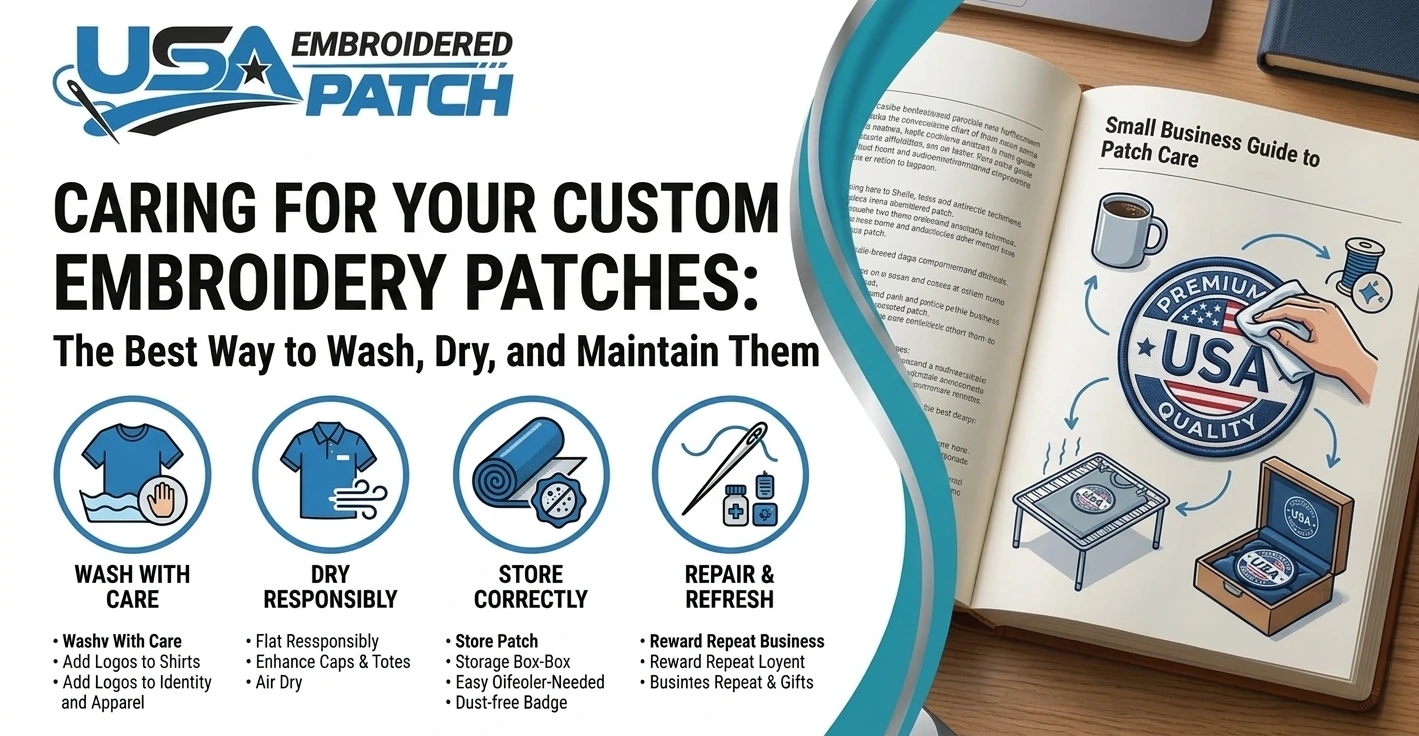
A quality embroidery patch can really add that special something to your jacket, hat, uniform, or bag. What if this patch gets dirty, stains, or begins to peel off? Do you wash the garment, the patch, or not wash at all?
This depends on how the patch is attached and the kind of backing and material beneath it.
Custom embroidery patches care doesn’t have to be difficult. All it takes is the proper technique and some attention to details so as to decrease wear and tear and keep your designs looking neat.
In this guide, we will walk you through safe patch wash methods, proper drying techniques, and more.
What Are Custom Embroidery Patches?
Custom embroidery patches are fabric swatches which are embossed with images, logos, letterings, or insignias. These are used by companies on uniforms; by clubs on teamwear; and by individual persons on their jackets, caps, backpacks, and other gear.
The raised nature of the stitches gives an embroidered design its texture and sets it apart from any design that is merely printed. Nevertheless, those stitches and the backing material underneath require proper handling.
For instance, a stitched patch can withstand regular washes better than a heat-applied patch which has an adhesive backing. Likewise, there will be a difference in treatment when the patch is applied to a washable denim jacket versus a structured cap.
The key is to consider three things before cleaning:
Embroidery: Raised stitch work, lettering, and designs may be susceptible to friction.
Attachment: Stitching, heat activatable glue, and hook-and-loop fastening systems all have different maintenance needs.
Garment: Fiber content, color, style, and care label information will affect the cleaning options.
Once you understand these differences, maintaining custom embroidery patches becomes much easier.
Know Your Patch: How Attachment Affects Care
Can you wash sew-on embroidered patches normally?
Sew-on patches are held together using stitches, which make them ideal for clothes that require frequent wear. Nevertheless, they can come off as a result of constant friction or vigorous washing.
Flip the piece of clothing inside out and ensure that you use the appropriate machine wash cycle to check whether there are any loose threads in the patch.
How should you wash iron on embroidered patches?
Iron on embroidered patches have heat-activating glue that bonds the design to the fabric. Their prime concern is ensuring that the patch stays securely bonded while cleaning.
Consult both the directions for using the patch and the care label on your clothing. Do not use any additional heat, hard scrubbing, or soaking of the area, especially when you do not know about the waterproofing of the adhesive.
If you see any edges starting to peel off, resist the temptation of ironing that area immediately. Consult the manufacturer regarding its reattachment guidelines.
Should you remove Velcro embroidered patches before washing?
Yes, if the patch is removable. Detaching Velcro embroidered patches prior to washing will prevent wear on the fastening device and decrease the likelihood of any hooks catching onto other pieces of clothing.
The open hook-and-loop fastener should be closed when washing the garment as per its care label directions. Lint should be removed from the removable patch separately with an appropriate tool.
For non-removable patches, inspect them for seams prior to washing.
How to Wash Embroidered Patches Step by Step
Wondering whether a stain requires a full wash? Start with the gentlest suitable method. Small marks often need less intervention than an entire garment.
Step 1: Check the care instructions
Read the garment label and any instructions supplied with the patch. Check the permitted water temperature, washing method, and drying restrictions.
If the garment is dry-clean only, or the patch has a delicate backing, seek appropriate cleaning guidance before attempting to wash it at home.
Step 2: Remove dirt and detachable patches
Use a brush to sweep away loose dust. Detach any removable patches and fix any exposed Velcro fasteners.
Check any remaining patches for any loose seams, fray or peeling adhesive. Fix any problems before washing, if possible.
Step 3: Treat stains without scrubbing
Moisten a piece of cloth with cold or slightly warm water, depending on the compatibility of the material.
Use a tiny bit of a gentle detergent if required, according to the type of garment.
Press the stain softly without scrubbing the embroidery.
Do not use any bleach or an unknown stain remover, which could change the color of the thread, fabric dye, or adhesive.
In case of a colored patch, try the cleaning procedure on an inconspicuous part.
Step 4: Choose hand washing or machine washing
In case machine washing is allowed, wear the piece inside out and use a wash bag where necessary. Machine wash using a gentle setting and at a temperature suggested by the care tag.
Hand washing is more advisable when dealing with delicate items or patches that might come off easily. Fill a basin with water and use a suitable detergent. Do not twist, wring, or rough handle the material.
Step 5: Rinse and inspect
Rinse away detergent residue without stretching the garment. Check whether the patch remains securely attached and whether the stain has lifted.
If the patch begins peeling or its stitching loosens, stop handling the affected area and assess the damage before proceeding.
Practical tip: You do not need to wash a garment repeatedly to remove one small mark. When suitable for the material, careful spot cleaning can reduce unnecessary washing and friction.
Caring for Different Types of Embroidered Patches
What is the safest way to clean custom hat embroidered patches?
Custom hat patches need care from both design and structure perspective of the hat. Soaking, twisting, or overheating the hat might affect its crown and brim.
Begin with gentle spot cleaning in case it is allowed according to the manufacturer’s recommendations. Use soft fabric and correct cleaning fluid without wetting patches that are attached to the hat with adhesive.
Dry the hat in its original shape. Do not hang it by the patch or put any heavy things on top of it.
How do you maintain patches on uniforms and workwear?
The uniform may require frequent washing due to perspiration, dirt, and usage. It is advisable to adhere to the hygiene regulations at work and instructions on the care tag and not pick the laundry method solely on the basis of the patch.
If the design is removable, remove the patch before laundry. If the patch is sewn on, check for loose threads around the edge.
What about patches on backpacks and jackets?
Friction occurs frequently on bags and jackets due to straps, zips, and other equipment. Remove any surface dirt or stains prior to their becoming difficult to remove.
If the bag is made of leather or coated fabrics, consult the manufacturer’s care guide to ensure that it is cleaned without water and detergent. The process that is used on denim might not work on these materials.
How to Dry Embroidered Patches Safely
Cleaning is only half the job. Incorrect drying can affect adhesive, distort fabric, or put unnecessary strain on the patch.
Is air drying better for embroidered patches?
Air drying is a sensible option for many patched garments, provided the garment's instructions allow it. Gently press excess water out with a clean towel instead of twisting the fabric.
Lay the garment flat or hang it as recommended for its material. Keep the embroidered design in its natural position and avoid stretching the surrounding fabric.
How do you dry custom embroidery patches without damaging the backing?
To dry custom embroidery patches safely, avoid direct heat sources and excessive handling while the garment is wet.
Some adhesive backings can be affected by high temperatures, while certain fabrics may shrink or lose their shape. Do not assume that tumble drying is safe simply because the garment feels sturdy.
For caps, support the crown with a clean towel or suitable form if appropriate. Make sure the garment and patch are completely dry before storing them.
If the care label permits tumble drying, follow its recommended settings and check whether the patch manufacturer gives additional restrictions.
How to Maintain Patches Long-Term
A simple maintenance routine can help reduce damage between washes.
Inspect the edges: Check for loose stitching, fraying, and lifting adhesive. Small problems are easier to address before they spread.
Reduce friction: Avoid unnecessary rubbing against rough surfaces, abrasive straps, and exposed zips.
Clean marks early: Remove surface dirt using a suitable gentle method instead of waiting until the entire garment needs cleaning.
Store items properly: Keep garments clean and dry. Avoid sharp folds across raised embroidery and do not stack heavy objects on delicate designs.
Iron cautiously: Follow the garment and patch instructions. Never assume that a patch can tolerate direct heat just because the surrounding fabric can.
Choose suitable attachment methods: If you are ordering patches for frequently washed uniforms or workwear, discuss laundering requirements before selecting the backing.
These habits make custom embroidery patch care more manageable, particularly when several garments carry the same design.
Common Mistakes That Damage Embroidery Patches
Some of the most avoidable problems come from treating every patch as if it were made and attached in the same way.
Watch out for these mistakes:
Using excessive heat: High temperatures can affect adhesive backings and certain fabrics.
Scrubbing raised embroidery: Vigorous rubbing may pull threads or distort detailed designs.
Using harsh chemicals: Bleach and incompatible stain removers may alter colors or damage materials.
Ignoring loose edges: Repeated washing can worsen existing attachment problems.
Ironing directly over the design: Heat and pressure may flatten raised stitching or damage adhesive.
Leaving fasteners exposed: Open hook-and-loop fasteners can collect lint and snag clothing.
Storing damp garments: Trapped moisture can cause unpleasant odors and create storage problems.
When in doubt, check the manufacturer's instructions and choose the least aggressive method that is suitable for the material.
Frequently Asked Questions
1. Are embroidered patches washable in the washing machine?
They are, as long as their backing and the garment they are sewn to can be washed using a machine. The garment must be turned inside out during washing, and the care label of both should be followed.
2. Is there a particular frequency for washing patches?
It depends on whether your garment needs to be cleaned. A spot clean could help in avoiding too many washes if the process is safe for the garment and its materials.
3. Do iron-on patches come off during washing?
Some might, since the adhesive bonding may weaken due to frequent washing, improper temperature settings, and rubbing. Read the instruction on how to do it correctly.
4. Can I put the garment with embroidered patches into a dryer?
Only if you are sure that it is safe to dry it that way. Air drying would be more secure for most garments, particularly with unknown temperature requirements for the backing material.
5. How should I clean velcro embroidered patches?
Detach patches that can be detached from the clothes before cleaning them. Clean the fastening side of the patches gently by removing the lint from it. Similarly, clean the embroidered side of the patches using the proper fabric.
6. What should I do if embroidery on the patch starts to fray?
Do not pull the threads from the embroidery of the patch. You need to check the damage to either the embroidery or the patch attachment. Arrange a proper repair for it.
7. Is it possible to iron directly on the embroidered patches?
Ironing may be hazardous for the embroidered patches and garments. Avoid ironing the patches directly unless confirmed by the manufacturer that it is possible.
8. How do I care for custom hat patches?
Begin with spot cleaning if this is allowed according to the instructions for care of your hat. Do not unnecessarily soak structured hats, allowing them to dry in their natural shape.
9. How can I stop my embroidered patches from deteriorating?
Practice proper washing techniques, limit friction, refrain from using chemicals that may be incompatible, and check the stitching frequently. Selecting a proper means of attachment for your particular piece of clothing will also help.
Final Thoughts
The best way to keep embroidered patches looking good is to understand their materials before cleaning them. Check the attachment, follow the garment's care instructions, remove stains gently, and avoid unnecessary heat and friction.
Whether you are looking after a favorite jacket, a work uniform, or a collection of caps, consistent care can help preserve the stitching and overall appearance of your designs.
If you are planning to order new patches, consider how often the garment will be washed, what fabric it uses, and whether a sew-on, iron-on, or detachable backing is more suitable.
Looking for custom embroidery patches for your next project?
Explore the available designs and attachment options, and choose a solution that suits your garment, intended use, and maintenance needs. Starting with the right patch can make caring for it much simpler in the long run.